

ExxonMobil, Indonesia and Malaysia Advance Large-Scale Offshore Carbon Storage Projects
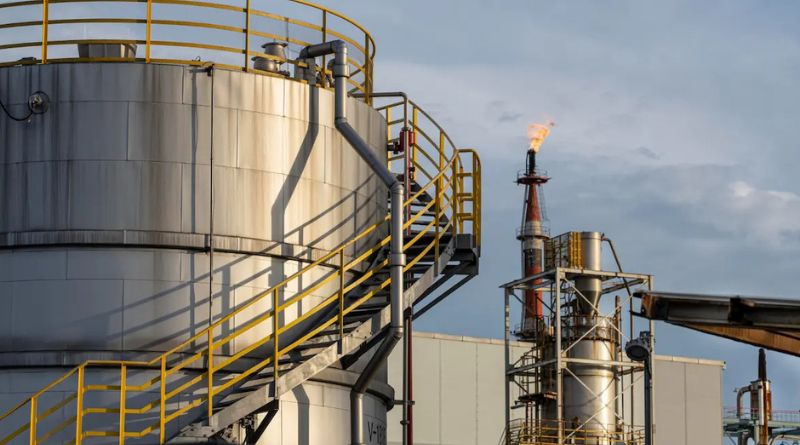
Southeast Asia is in the middle of one of history’s great economic sprints. Refineries, cement plants, steel mills, and chemical factories are running at full tilt across the region — powering development for hundreds of millions of people, and releasing enormous volumes of carbon dioxide in the process.
That tension — between growth and emissions — has no easy answer. But a series of landmark agreements between ExxonMobil and two of the region’s most powerful state energy companies may signal that a large-scale, unconventional approach is beginning to take shape beneath the ocean floor.
A region at a crossroads: growth versus emissions
Indonesia and Malaysia sit near the top of the region’s industrial emitters list. Both countries have set national net-zero targets, yet both face the same uncomfortable reality: renewable energy alone can’t get them there. Cutting emissions from heavy industry requires a fundamentally different toolkit. That’s where carbon capture and storage enters the picture.
The International Energy Agency has been direct on this point. Reaching net zero, the IEA has said, will be “virtually impossible without CCS.” That framing matters — it shifts CCS from a niche technical option into a core requirement of any credible decarbonization strategy.
What carbon capture actually means — and why underground storage matters
The process isn’t theoretical. CCS can remove around 90% of CO2 emissions from industrial activity or power generation, making it one of the most effective tools available for hard-to-abate sectors. For industries like cement and steel, where emissions are structural rather than incidental, that capacity is difficult to replicate through any other means.
The Indonesia deal: a $2.6 billion bet on offshore storage
The agreement between ExxonMobil and Indonesia’s state-owned energy company PERTAMINA represents one of the most ambitious CCS commitments in the Asia Pacific region to date. The Heads of Agreement outline a potential US$2.6 billion project centered on offshore fields near Sumatra and Java — established oil and gas territories with geological characteristics suited to CO2 storage.
The scale is notable. The project could contribute to storing up to 3 billion metric tons of CO2 across Asia Pacific, placing it among the largest storage targets in the region. Immediate work includes concept-select studies, pre-Front End Engineering Design, and subsurface analysis to assess the viability and configuration of storage sites.
Malaysia’s offshore hubs: among the first off the peninsula
In Malaysia, ExxonMobil has signed Project Development Agreements with national oil company PETRONAS to advance CCS hubs in the Malay Basin. The agreements are described as among the first CCS activation initiatives off the country’s peninsula — a meaningful milestone in Malaysia’s low-carbon transition.
The scope covers the full CCS value chain: technical evaluation of identified fields for CO2 storage, development of commercial frameworks, and establishment of advocacy plans to support regulatory and policy development. That last element reflects how nascent the regulatory environment for CCS remains across much of the region. The hubs are also designed to accept CO2 from international sources, positioning Malaysia as a potential storage destination for neighboring countries with fewer geological options.
Economic upside and the road ahead
Both Indonesia and Malaysia are positioning themselves as regional CCS hubs, meaning they could eventually accept captured carbon from across Southeast Asia. For smaller neighboring economies without viable offshore storage geology, that option could be the difference between meeting and missing their own net-zero commitments.
Regulatory frameworks are still being built in parallel with the technical work. Advocacy plans for enabling CCS policy are embedded in both sets of agreements — an acknowledgment that the legal and commercial infrastructure needs to catch up with the engineering ambition.
The agreements signed so far are early-stage — heads of agreement and project development frameworks rather than final investment decisions. The direction, though, is clear. Southeast Asia is beginning to treat large-scale carbon storage not as a distant possibility but as a near-term industrial strategy. How quickly the regulatory environment matures, and whether subsurface studies confirm the geology’s promise, will determine whether that strategy moves from blueprint to reality.